

Ethernet Extender & PoE Extender

Power over Ethernet (PoE) Technology

PoE Standards, Power Budgets & Long-Distance PoE

Power over Ethernet (PoE) sends electrical power and network data together over one Ethernet cable. A single run can power an IP camera, a Wi-Fi access point, a VoIP phone or an access control panel, with no outlet or electrician at the device. Enable-IT has engineered PoE and Ethernet extension equipment in the USA since 1997, and this guide collects what our engineers have learned about making PoE work in the real world. Start with the basics in an in-depth look at Power over Ethernet and the advantages of PoE.

Power Over Ethernet & PoE Extender Solutions

PoE Standards: PoE, PoE+ and PoE++

The IEEE defines how much power a port can safely deliver:

  • 802.3af (PoE, Type 1): 15.4 W at the source, about 12.95 W at the device.
  • 802.3at (PoE+, Type 2): 30 W at the source, 25.5 W at the device.
  • 802.3bt (PoE++, Type 3 and Type 4): up to 60 W and 90 W at the source, using all four wire pairs.

See the full breakdown in PoE vs PoE+ vs PoE++.

Active vs Passive PoE

Standards-based active PoE is cautious by design. The switch or injector first detects a valid device, then negotiates its power class, and only then ramps to 44–57 V. It removes power within milliseconds when the device disconnects. Passive PoE has no handshake. It holds a fixed 12, 24 or 48 V on the cable whether or not anything is connected. That difference matters: toggling per-port PoE on passive equipment can short adjacent pins and damage gear. Learn more in active PoE vs passive PoE and why turning off per-port PoE on passive equipment can spell disaster.

Power Budgets and Wattage Draw

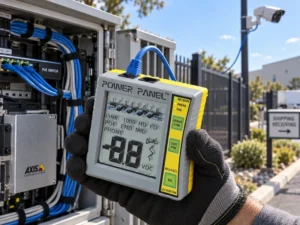
Most “almost working” PoE networks fail on arithmetic, not hardware. A camera that draws 8–12 W in daylight can pull 25–40 W at night with IR on, and a PTZ camera with its heater running can need 60–90 W. Standard ratings are measured at the source, so cable losses come off the top. Design for the worst-case load, not the daytime average. Our guides to the PoE power budget and PoE wattage draw show how to plan it. A PoE tester confirms the voltage, class and wattage actually reaching the device. Understanding the roles of a PoE injector vs a PoE splitter helps you supply power exactly where it’s needed.

Going Beyond 328 Feet

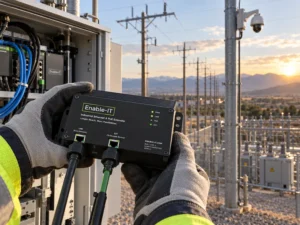
Every IEEE PoE standard shares the same 100-meter (328 ft) limit. Past that point, voltage drops and data fails. Enable-IT PoE injectors and PoE Extenders regenerate power and data to reach thousands of feet over existing copper or coax, with no outlet at the far end. See how in maximizing PoE distance and PoE extender distance for surveillance cameras.

PoE engineering also works at the opposite extreme. For Liquid Robotics’ Wave Glider ocean vehicle, Enable-IT built a custom single-wire PoE extender that uses seawater as the return path. It delivers 100 Mbps with PoE while drawing just 3.6 W per board. Read the single-wire PoE extender open ocean case study.

Ready to put PoE to work? Browse our PoE Extenders, PoE Injectors and PoE Switches, or talk to an Enable-IT engineer about your power budget.

Find your PoE Extender

★ AS9100D Aerospace Quality Manufacturing ★ Same Day Discounted Rate Shipping ★
★​ Custom Design on Demand – No Minimum Order Quantity ★ USA Factory Floor Direct ★

Enable-IT is the only Trusted Ethernet Extender and PoE Extender allowed by the US Federal Govt in their Own Network Infrastructure!